|
Getting your Trinity Audio player ready...
|
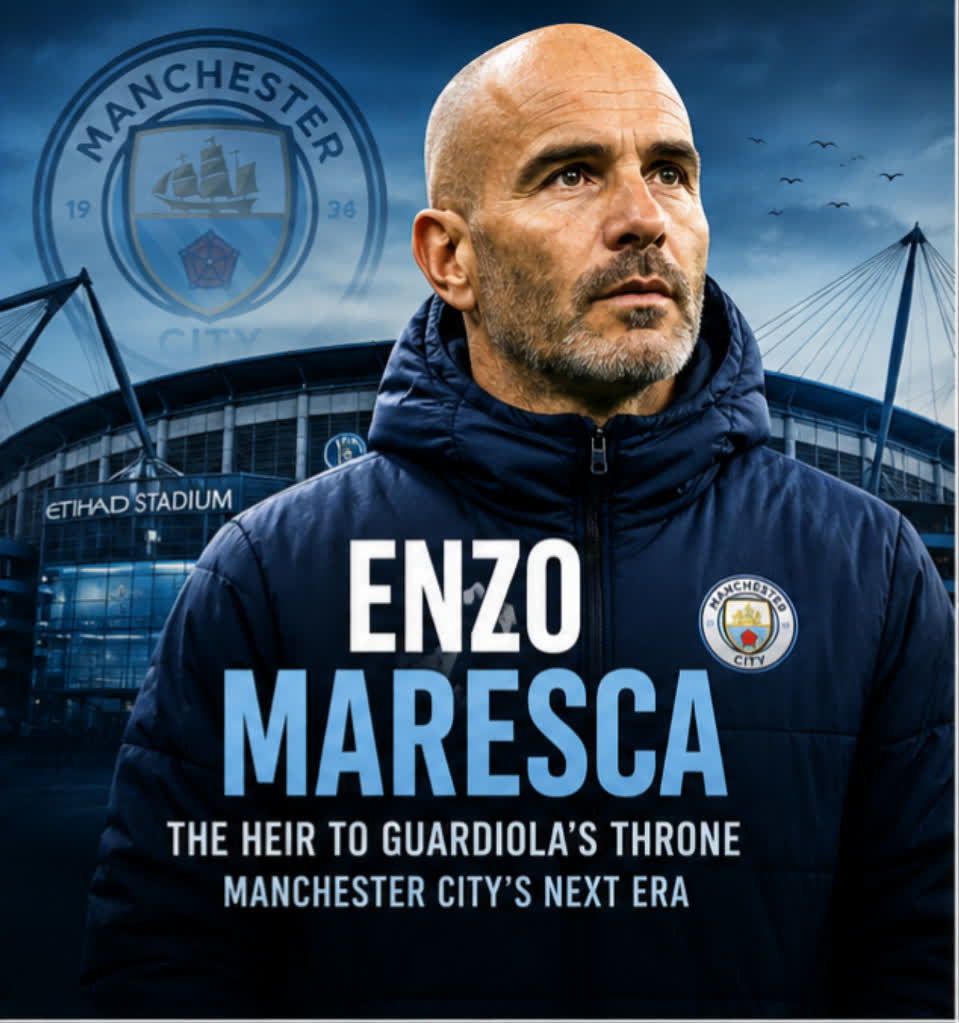
Few managerial appointments in modern football carry the weight of succeeding a transformational figure. When Sir Alex Ferguson left Manchester United, the club spent years searching for stability. When Arsène Wenger departed Arsenal, a long transition followed. Now, Manchester City face a similar moment as the Pep Guardiola era comes to an end, with Enzo Maresca widely expected to become the man entrusted with preserving one of football’s greatest dynasties.
For City, this is not merely a coaching change. It is the passing of an empire from its architect to one of his most trusted disciples.
Maresca arrives with a reputation as one of Europe’s brightest tactical minds, a coach shaped by Guardiola’s philosophy but ambitious enough to develop his own identity.
Yet, he also arrives carrying enormous baggage: questions about his turbulent Chelsea spell, doubts over whether he possesses the charisma and authority to replace Guardiola, and the burden of maintaining standards that may never be matched again.
The challenge awaiting him at the Etihad could define the next decade of Manchester City’s history.
FootballOrbit presents you with the Italian’s rise, struggles and prospects.
Why Manchester City chose Enzo Maresca
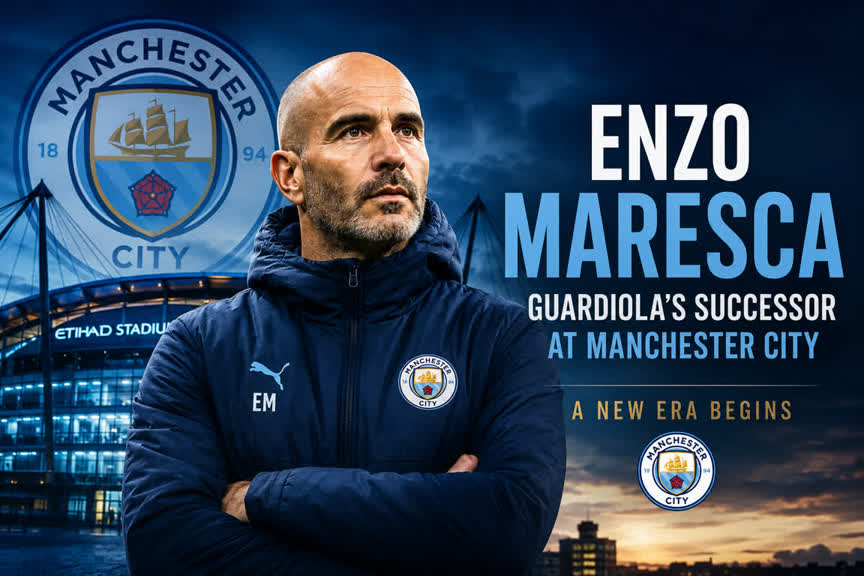
Manchester City’s decision appears rooted in continuity rather than revolution.
Maresca is not an outsider arriving with radically different ideas. He understands the club’s structure, culture, recruitment model, academy system, and tactical principles better than almost any available candidate.
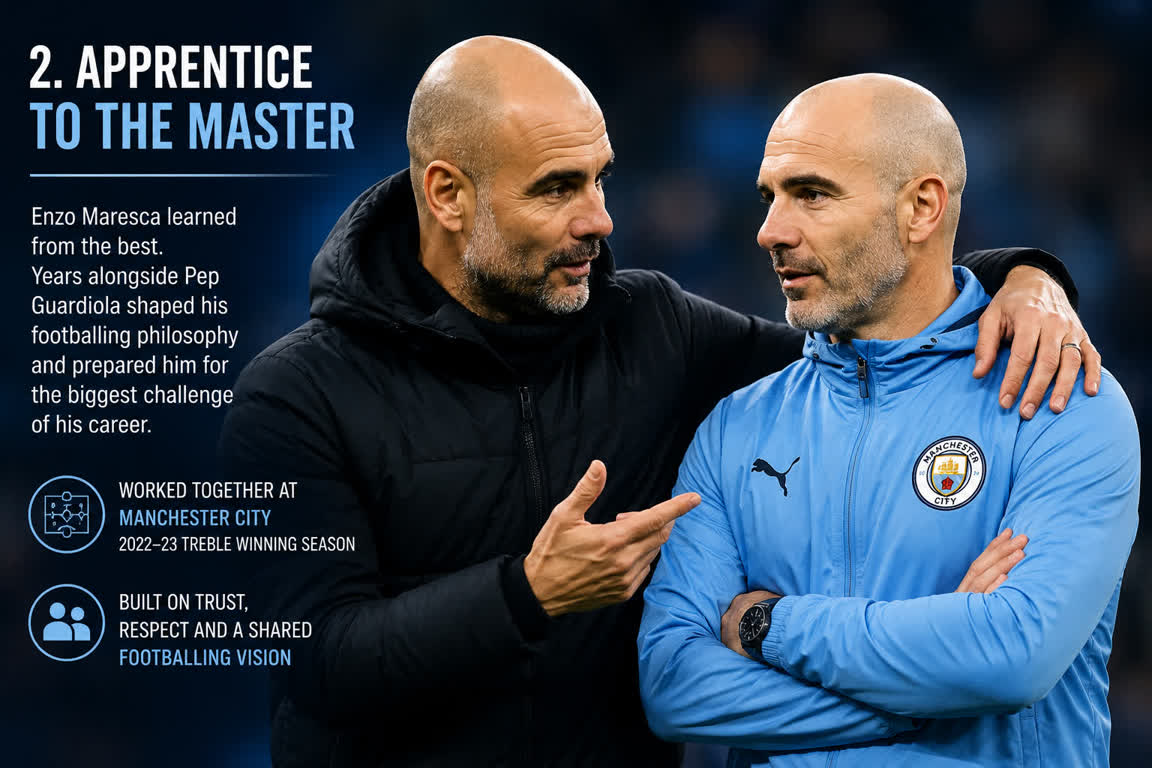
As Guardiola’s assistant during City’s historic 2022/23 Treble campaign, Maresca was deeply involved in the daily tactical preparation that produced one of the greatest club seasons in English football history.
He had already earned respect inside the City Football Group through his work with the club’s Elite Development Squad before joining Guardiola’s senior staff.
City’s executives have long prioritized succession planning. Reports suggest Maresca was viewed internally as a potential future manager years before Guardiola announced his departure.
His appointment reflects a simple belief:
Rather than tearing down Guardiola’s footballing architecture, City want someone capable of preserving and evolving it.
The tactical blueprint: Guardiola’s student
Positional play above everything
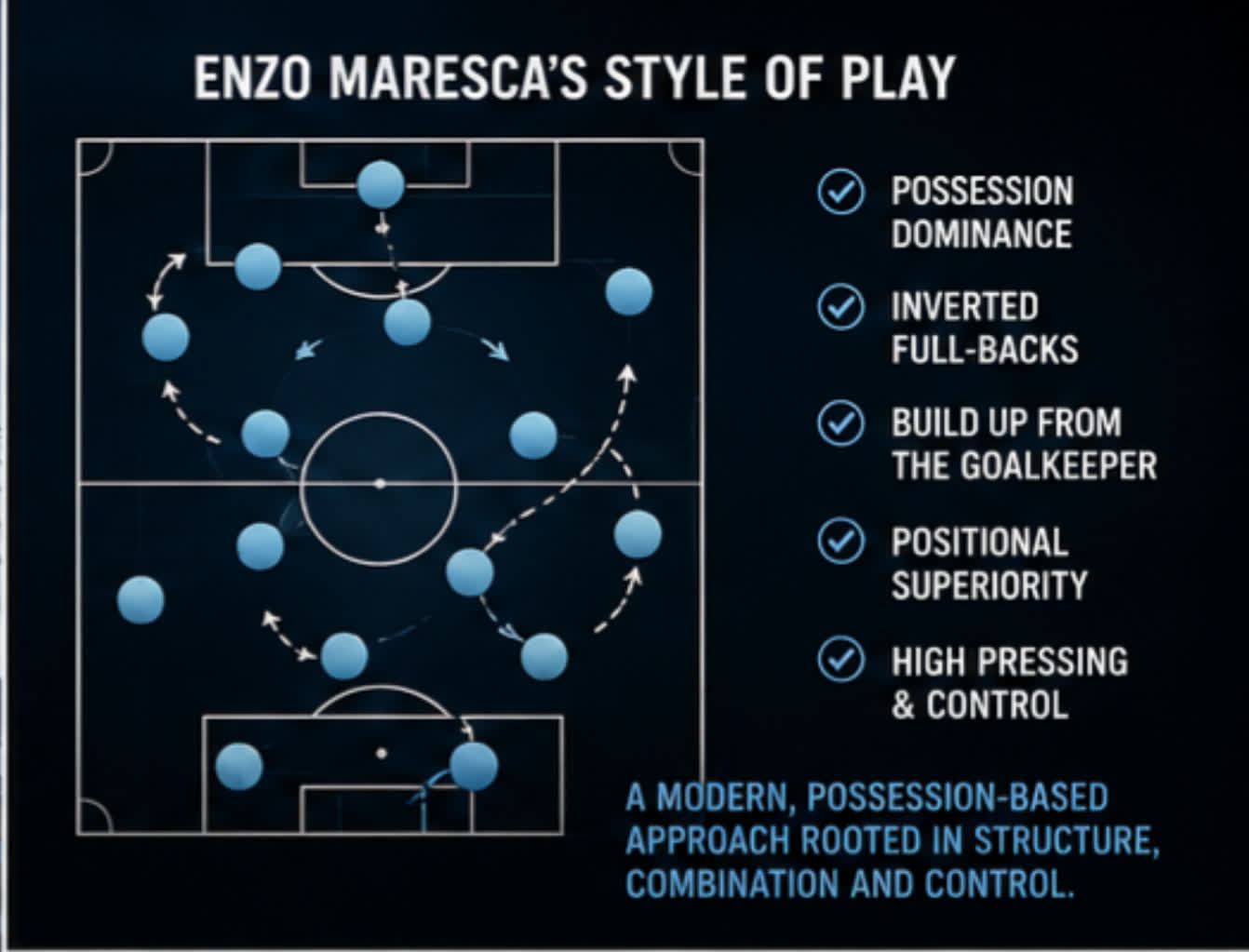
Maresca’s football is built upon positional play — the same tactical framework that underpins Guardiola’s teams.
His sides seek to:
- Dominate possession
- Create numerical superiority in key zones
- Manipulate opposition pressing structures
- Progress through short combinations
- Control matches through the ball
At both Leicester City and Chelsea, his teams frequently monopolized possession and patiently constructed attacks from deep areas.
The similarities with Guardiola are obvious.
However, Maresca has shown subtle differences.
Where Guardiola often embraces fluidity and improvisation in the final third, Maresca’s teams can appear more structured and methodical.
His positional discipline is extremely strict, with players often remaining in designated zones for extended periods.
This has led some observers to describe him as Guardiola’s most doctrinaire disciple.
The inverted full-back system
One hallmark of Maresca’s football is the use of inverted full-backs.
During his Leicester and Chelsea spells, full-backs frequently moved into midfield during possession phases, creating additional passing lanes and helping establish numerical superiority centrally.
At Manchester City, this concept will feel familiar.
Players such as Josko Gvardiol, Nico O’Reilly, Rico Lewis, Rayan Aït-Nouri and Matheus Nunes already possess the technical profile required for these roles.
Rather than redesigning City’s tactical framework, Maresca can simply continue refining what already exists.
Building from the goalkeeper
Another defining characteristic is his insistence on building attacks from the goalkeeper.
At Leicester, the team’s patient circulation occasionally frustrated supporters who felt the approach was too risk-heavy.
At Chelsea, similar criticism emerged whenever opponents successfully pressed high and forced turnovers.
Yet Maresca rarely compromises.
His philosophy is based on the belief that long-term control outweighs short-term risk.
For Manchester City, whose squad is already among the most technically gifted in world football, this principle should be easier to execute than at any previous club he has managed.
Past exploits: Why his reputation grew so quickly
Leicester City’s Championship triumph
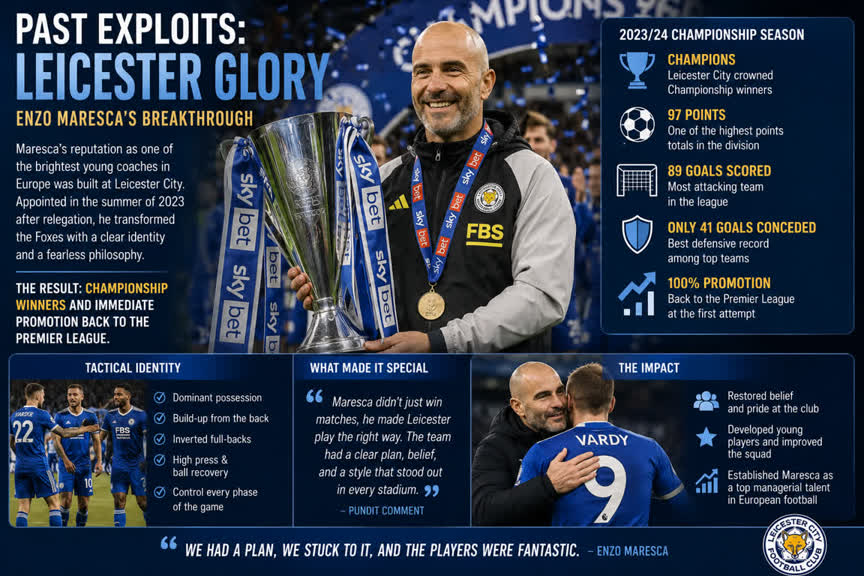
Maresca’s breakthrough came at Leicester City.
Taking charge after the club’s relegation from the Premier League, he immediately imposed a possession-heavy style that dominated the Championship.
Leicester won the league and secured immediate promotion while playing some of the division’s most sophisticated football.
What impressed observers wasn’t merely the results.
It was the clarity.
Leicester looked like a team with a distinct footballing identity from the first weeks of his tenure.
That season established Maresca as one of Europe’s most promising young coaches.
Winning respect at Chelsea

His Chelsea spell proved more complicated.
Results were often good enough, but perceptions remained mixed.
Maresca guided Chelsea to Champions League qualification while also delivering silverware, including the Conference League and FIFA Club World Cup during his time at Stamford Bridge.
Yet many Chelsea supporters never fully embraced him.
The reasons were varied:
- Conservative possession patterns
- Slow attacking build-up
- Inconsistent performances against elite opponents
- Frustration with squad management decisions
The paradox was fascinating.
Maresca was achieving objectives while simultaneously facing skepticism.
That experience may ultimately prove invaluable.
At Manchester City, he will encounter even greater scrutiny.
Enzo Maresca’s struggles at Chelsea
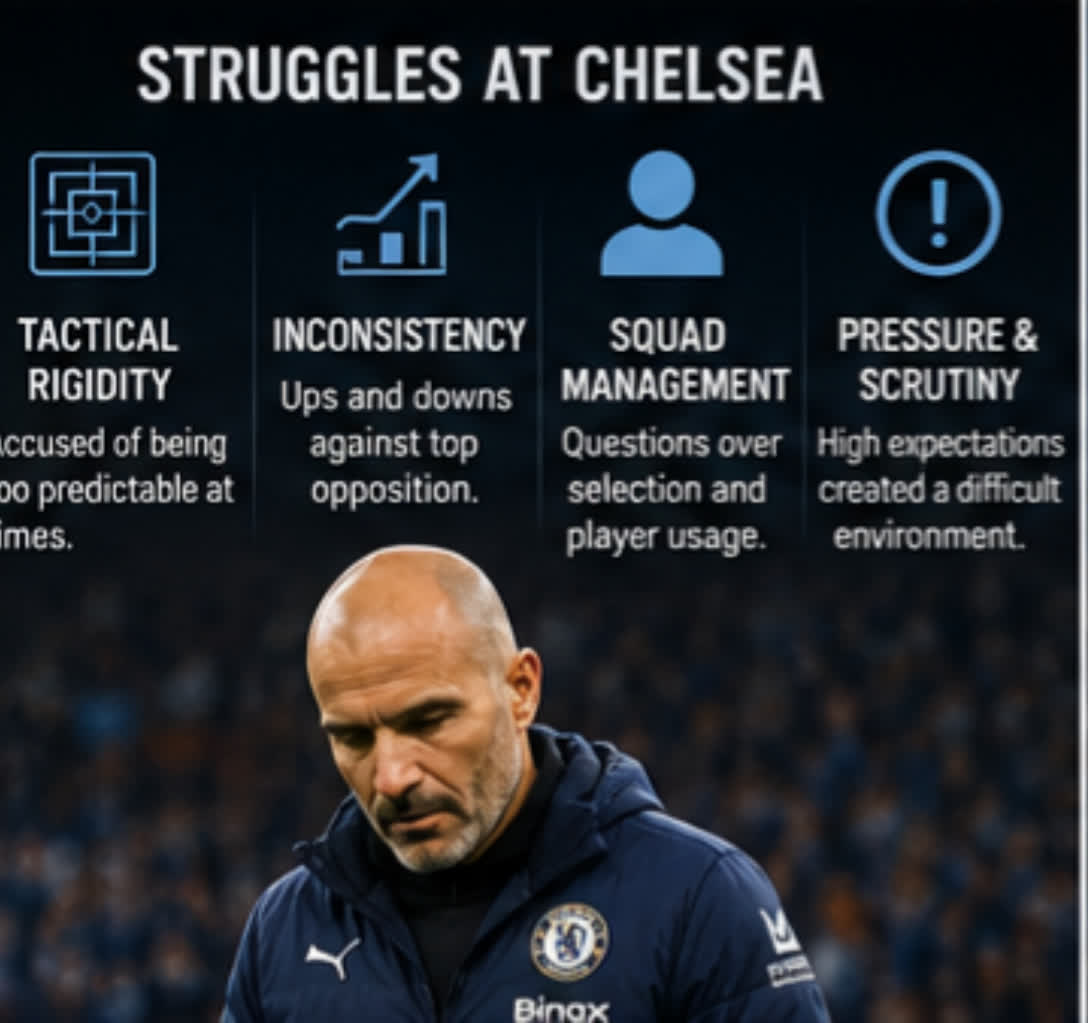
While trophies and qualification places matter, the Chelsea period exposed several weaknesses.
Tactical rigidity
One criticism repeatedly directed at Maresca concerns adaptability.
His commitment to positional football is unwavering.
Supporters and pundits sometimes felt Chelsea became predictable because of their adherence to structure.
When opponents disrupted the first phase of build-up, alternative solutions were not always obvious.
The accusation was simple:
Was Maresca following Guardiola’s playbook too closely?
At City, where the squad is superior technically, this issue may be less visible.
However, Premier League rivals will still seek ways to exploit any inflexibility.
Handling expectations
Chelsea represented his first experience managing a global superclub.
The scrutiny was relentless.
Every tactical tweak became a debate.
Every dropped point became a crisis.
Although he ultimately delivered respectable results, tensions reportedly developed between Maresca and sections of the club hierarchy before his departure.
Managing Manchester City will involve similar pressures — but on an even greater scale.
The impossible task: Replacing Guardiola
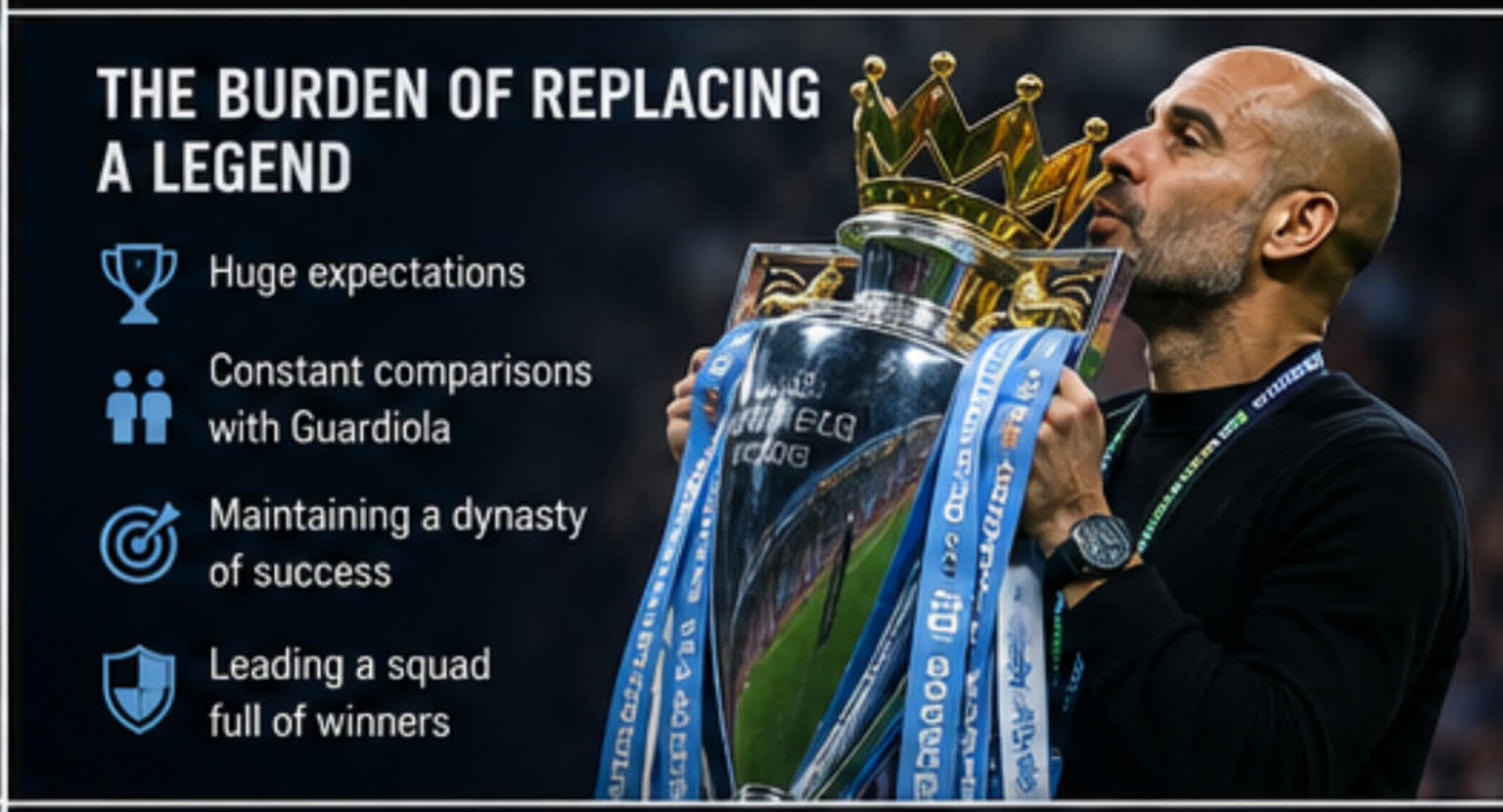
The biggest challenge facing Maresca has little to do with tactics.
It is psychological.
Guardiola’s legacy at Manchester City is almost beyond comprehension.
Over a decade he transformed:
- The club’s culture
- The academy pathway
- Recruitment structures
- Tactical standards
- Expectations
He collected league titles, domestic cups, and the Champions League while redefining how football is played in England.
Any successor would struggle.
Maresca’s challenge is especially difficult because comparisons will be unavoidable.
Every defeat will trigger headlines asking:
“Would Guardiola have won this game?”
Every tactical decision will be measured against the master.
What Manchester City can expect from Enzo Maresca
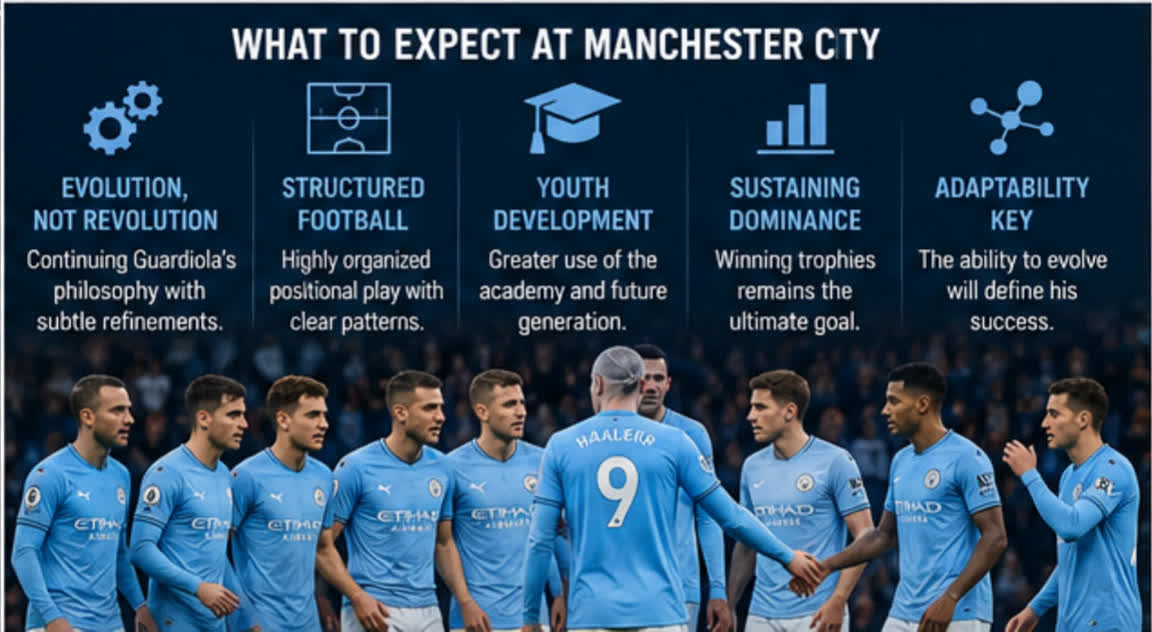
Evolution rather than revolution
City fans should not expect dramatic change.
The core principles will remain:
- Possession dominance
- High pressing
- Positional play
- Technical superiority
Maresca’s first objective will likely be preserving continuity.
Players such as Rodri, Erling Haaland, Phil Foden and Ruben Dias have spent years operating within Guardiola’s framework.
A radical departure would make little sense.
Greater emphasis on structure
One subtle shift may involve more rigid positioning.
Maresca’s teams tend to be highly choreographed.
Movements are rehearsed.
Passing patterns are systematic.
The result could be a City side that remains dominant but perhaps appears slightly less improvisational than Guardiola’s greatest teams.
Youth development
Maresca’s academy background could become a major asset.
His previous work with City’s youth setup helped develop several talented prospects.
Given the aging profile of some senior players and the departures expected after Guardiola’s exit, integrating academy talent may become a key part of his tenure.
Potential risks from Man City’s appointment of Enzo Maresca
No appointment is risk-free.
Several dangers loom.
The Guardiola shadow
Many excellent coaches have failed because they followed legends.
The comparison itself can become destructive.
Being Guardiola’s assistant is different from replacing him.
Winning immediate respect from a squad full of elite stars will be essential.
Moreover, it was widely believed that Maresca fell out with some players towards the end of his reign, causing him to lose control of the dressing room.
He must avoid a repeat at the Etihad.
Tactical predictability
If opponents find effective ways to disrupt City’s build-up, Maresca must demonstrate flexibility.
Trophy expectations
At most clubs, finishing second is respectable.
At Manchester City, it can be viewed as failure.
Future Prospects
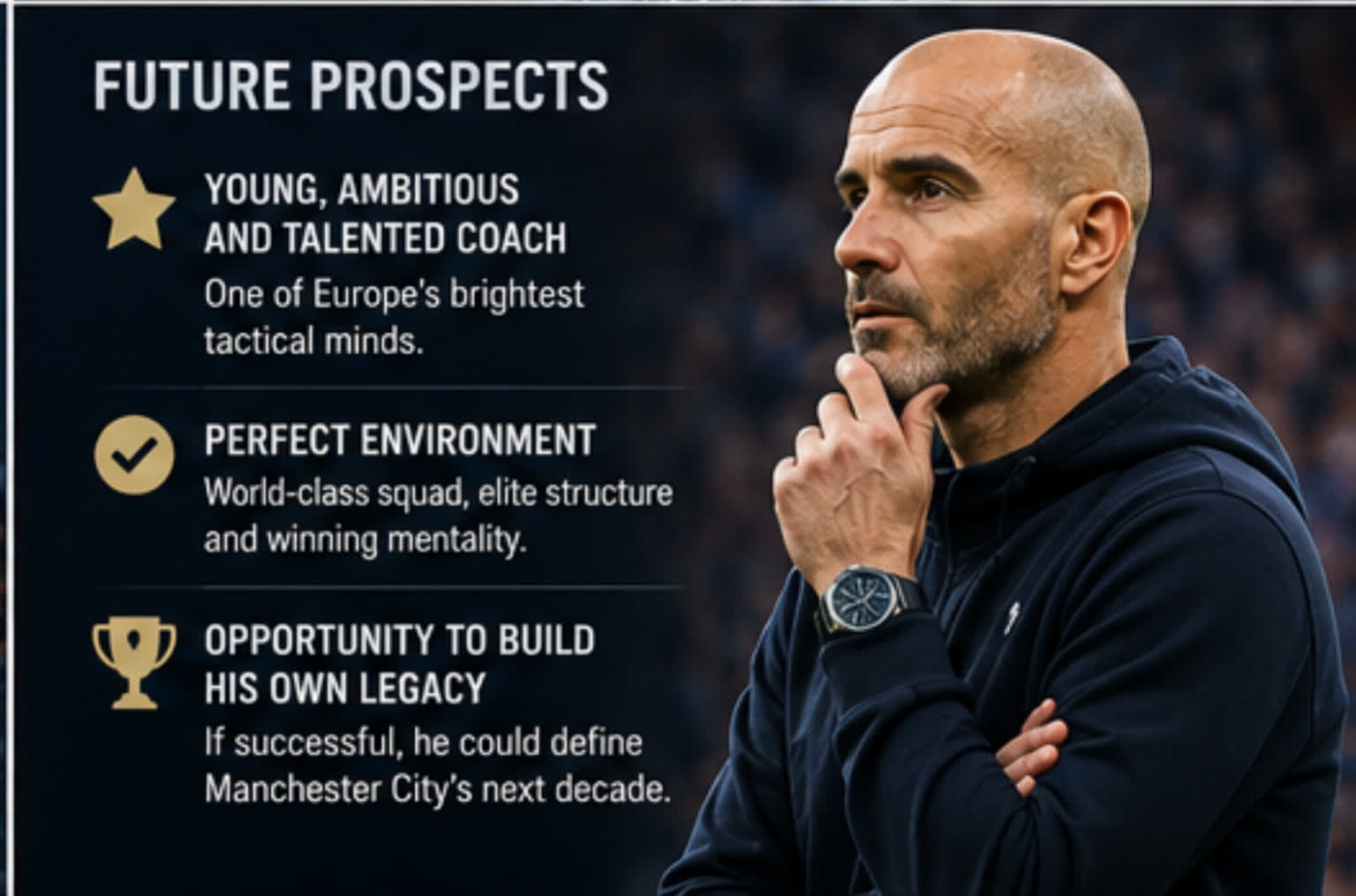
Despite the risks, there are reasons for optimism.
Maresca is still relatively young by elite managerial standards and possesses a modern tactical education that aligns perfectly with City’s footballing identity.
Unlike many successors who inherit clubs during decline, he takes over an institution that remains structurally strong.
City’s recruitment model remains among the best in football.
Their squad remains loaded with elite talent.
Their football philosophy already matches his own.
Perhaps most importantly, he understands exactly what the club expects.
Reports indicate City executives view him as the natural continuation of Guardiola’s project rather than a temporary caretaker.
Conclusion
Enzo Maresca’s expected appointment represents one of the most fascinating managerial successions football has seen in recent years.
He arrives with impressive credentials: a Championship title with Leicester, silverware and Champions League qualification at Chelsea, experience within the City ecosystem, and a tactical philosophy closely aligned with Guardiola’s.
Yet, success at Manchester City will require far more than tactical intelligence.
He must convince a dressing room accustomed to greatness, navigate the impossible comparisons with Guardiola, and prove that he is more than simply a disciple of the master.
If he succeeds, Maresca could become the architect of City’s next era.
If he fails, he will join a long list of talented coaches who discovered that replacing a legend is football’s most unforgiving assignment.
The throne is ready.
Now comes the challenge of proving he belongs on it.