
|
Getting your Trinity Audio player ready...
|
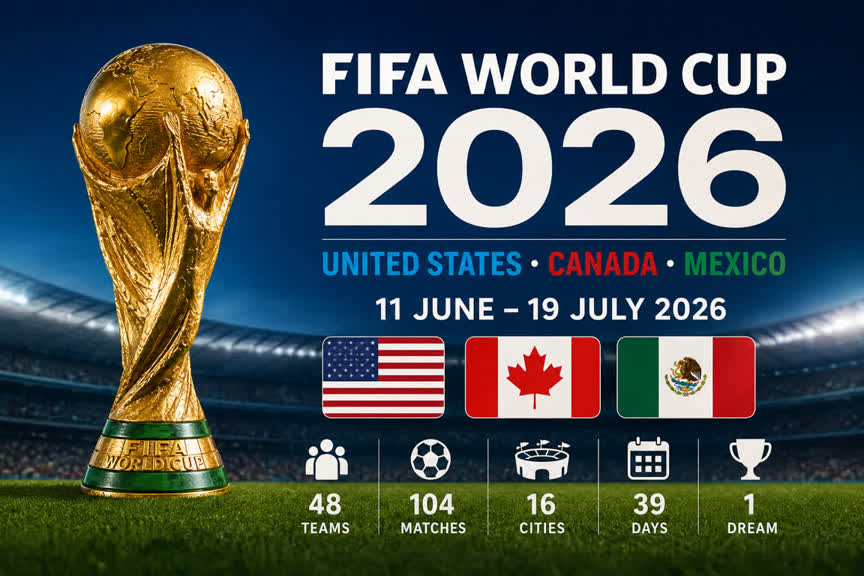
The 2026 FIFA World Cup is set to become the biggest, most ambitious, and most commercially successful football tournament ever staged.
For the first time in history, the tournament will be jointly hosted by three nations, feature 48 teams, span 16 host cities, and include an unprecedented 104 matches.
From iconic stadiums and revolutionary technology to expanded prize money and significant rule changes; the 2026 edition promises to redefine what a World Cup can be.
As football continues to evolve in the modern era, FIFA has designed this tournament to showcase the sport on a scale never seen before.
Thus, fans can expect more matches, more nations, more drama, and more innovation than any previous edition.
In this post, FootballOrbit presents you with all you need to know about the 2026 global mundial.
Tournament Overview

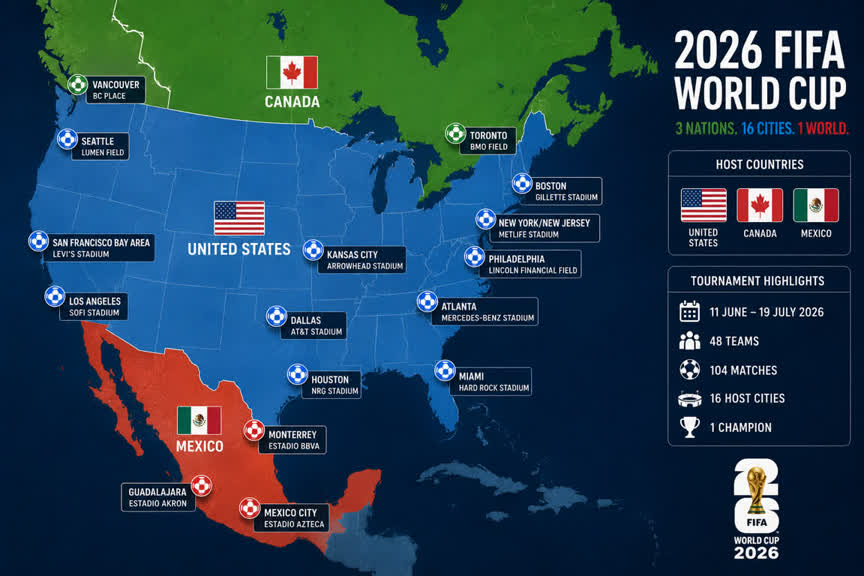
The 2026 FIFA World Cup will be held from the 11th of June to the 19th of July 2026 across the United States, Canada, and Mexico. It will be the 23rd edition of football’s most prestigious tournament and the first to be hosted by three countries simultaneously.
Key facts include:
- Tournament Dates: 11 June – 19 July 2026
- Host Nations: United States, Canada, Mexico
- Participating Teams: 48
- Total Matches: 104
- Host Cities: 16
- Tournament Duration: 39 days
- Final Venue: MetLife Stadium (officially rebranded as New York/New Jersey Stadium during the tournament)*
** This applies to all the other stadiums too, they are to rename to their host cities instead of using sponsorship titles, in accordance to FIFA’s sponsorship regulations.
Furthermore, the 2026 tournament marks the first men’s World Cup ever hosted by Canada and the first World Cup to feature 48 nations.
Why the 2026 World Cup is Historic
Several major milestones make this tournament unique.
First, it is the first World Cup hosted by three nations.
Second, it is the first World Cup featuring 48 teams rather than 32.
Third, it includes a record 104 matches, significantly increasing opportunities for nations and players to shine.
Moreover, the event will stretch across an entire continent, turning North America into the center of the football universe for over five weeks.
Host Countries
United States
The United States will host the majority of the matches and provide 11 of the 16 host cities. It will also stage the final.
The country previously hosted the World Cup in 1994, which remains one of the most successful tournaments in terms of attendance.
Mexico
Mexico will make history by becoming the first nation to host World Cup matches in three separate editions after previously hosting tournaments in 1970 and 1986.
Canada
Meanwhile, Canada will host men’s World Cup matches for the first time, representing another major milestone for football in the country.
Host Cities and Stadiums
United States
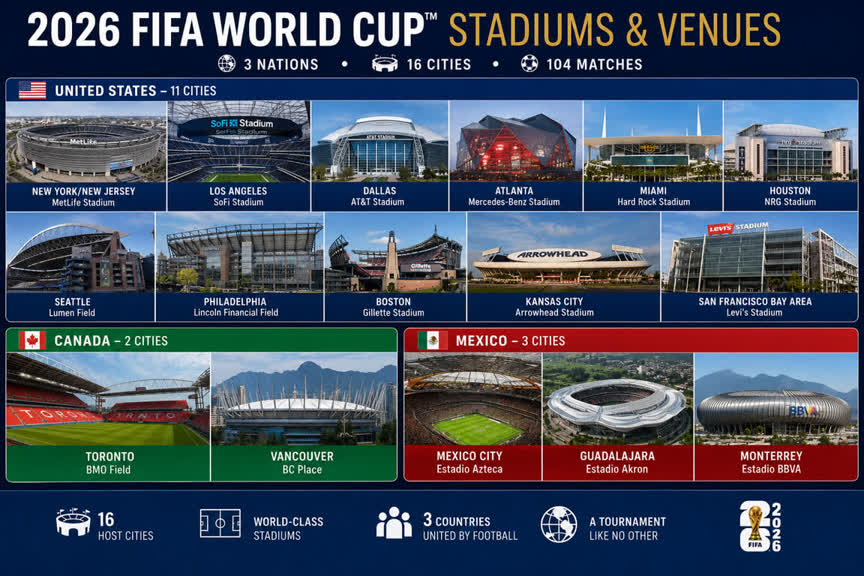
New York/New Jersey
- Stadium: MetLife Stadium
- Tournament Role: Final Venue
Los Angeles
- Stadium: SoFi Stadium
Dallas
- Stadium: AT&T Stadium
Atlanta
- Stadium: Mercedes-Benz Stadium
Miami
- Stadium: Hard Rock Stadium
Houston
- Stadium: NRG Stadium
Seattle
- Stadium: Lumen Field
Philadelphia
- Stadium: Lincoln Financial Field
Boston
- Stadium: Gillette Stadium
Kansas City
- Stadium: Arrowhead Stadium
San Francisco Bay Area
- Stadium: Levi’s Stadium
Canada
Toronto
- Stadium: BMO Field
Vancouver
- Stadium: BC Place
Mexico
Mexico City
- Stadium: Estadio Azteca
Guadalajara
- Stadium: Estadio Akron
Monterrey
- Stadium: Estadio BBVA
These venues collectively represent some of the largest and most technologically advanced sporting arenas in the world.
Opening Match and Final
The tournament opener will take place at the legendary Estadio Azteca in Mexico City on the 11th of June 2026.
Remarkably, Estadio Azteca will become the first stadium in history to host World Cup matches in three separate tournaments.
The final will be played on the 19th of July 2026 at MetLife Stadium in the New York metropolitan area.
New Tournament Format
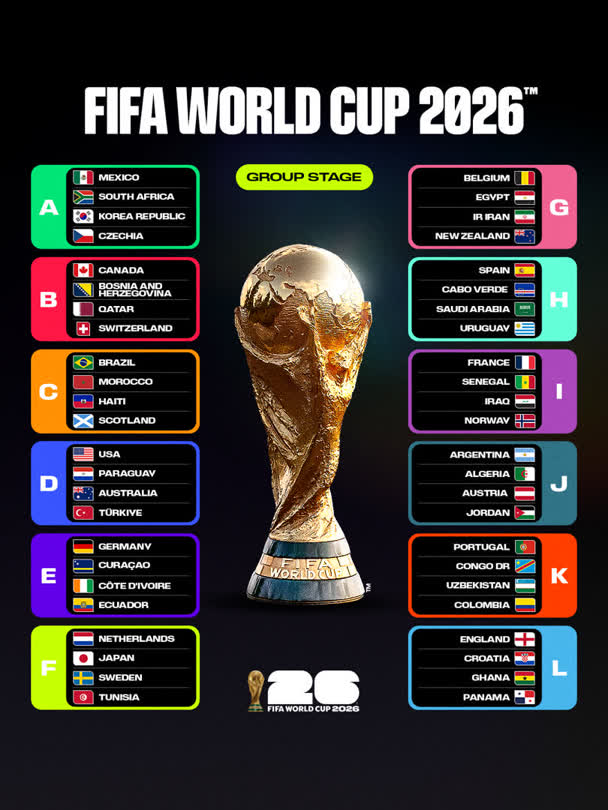
One of the most significant changes involves the expansion from 32 teams to 48.
The format will consist of:
- 12 groups
- 4 teams per group
- Each team plays 3 group matches
- Top 2 teams from every group qualify
- Best 8 third-placed teams also qualify
This creates a Round of 32 before the traditional knockout stages begin.
The knockout structure will be:
- Round of 32
- Round of 16
- Quarter-finals
- Semi-finals
- Third-place Playoff
- Final
As a result, teams reaching the final will play more matches than ever before (8 instead of 7).
Prize Money and Financial Rewards

The 2026 World Cup will feature the largest prize pool in tournament history.
FIFA approved a total financial contribution of approximately $727 million for participating associations. The prize money allocation alone amounts to $655 million, a 50 percent increase compared to Qatar 2022.
Prize distribution includes:
- Champions: $50 million
- Runners-up: $33 million
- Third Place: $29 million
- Fourth Place: $27 million
- Quarter-finalists: $19 million
- Round of 16 Teams: $15 million
- Round of 32 Teams: $11 million
- Group Stage Teams: $9 million
Additionally, every qualified nation receives $1.5 million in preparation funding.
Therefore, every participant is guaranteed at least $10.5 million before a ball is kicked.
Major Rule Changes
The 2026 tournament introduces several noteworthy changes designed to improve fairness and reduce time-wasting.
Expanded VAR Powers
Video Assistant Referee (VAR) technology will have a broader role than ever before.
VAR can now:
- Review incorrect corner-kick decisions
- Review second yellow card incidents
- Assess certain situations before set-piece restarts
- Intervene more proactively when crucial mistakes occur
These changes aim to reduce controversial errors that have influenced previous tournaments.
Faster Restarts
Referees will enforce strict time limits.
- Goal kicks must be taken promptly
- Throw-ins must be completed within five seconds
- Delays may result in possession being awarded to opponents
Therefore, teams will find it much harder to waste time.
Substitution Reforms
Players leaving the pitch after being substituted must do so quickly (within 10 seconds).
If they exceed the allotted time, their replacement can be delayed — leaving their team with 10 players on the field for at least a minute. This discourages tactical delays during critical moments.
Medical Treatment Adjustments
Outfield players receiving treatment must remain off the field for a designated period before returning (1 minute).
This measure prevents teams from using injuries to disrupt momentum or receive tactical instructions.
New Disciplinary Measures
Certain forms of dissent and misconduct now carry harsher punishments.
Officials and players engaging in prohibited confrontational behavior (i.e covering their mouths) may face red cards under updated regulations.
Technological Innovations
Enhanced Semi-Automated Offside Technology
Building on systems used in recent FIFA competitions, officials will benefit from advanced offside detection.
The technology uses multiple cameras and sophisticated tracking systems to provide faster and more accurate decisions.
Real-Time Referee Support
Assistant referees will receive instant offside alerts and additional technological assistance.
So, decision-making should become both faster and more accurate.
Stadium Infrastructure Upgrades
Numerous stadiums have undergone extensive modifications.
Many NFL venues have widened playing surfaces, altered seating configurations, and installed natural or hybrid grass systems to satisfy FIFA standards.
Fan Experience Innovations
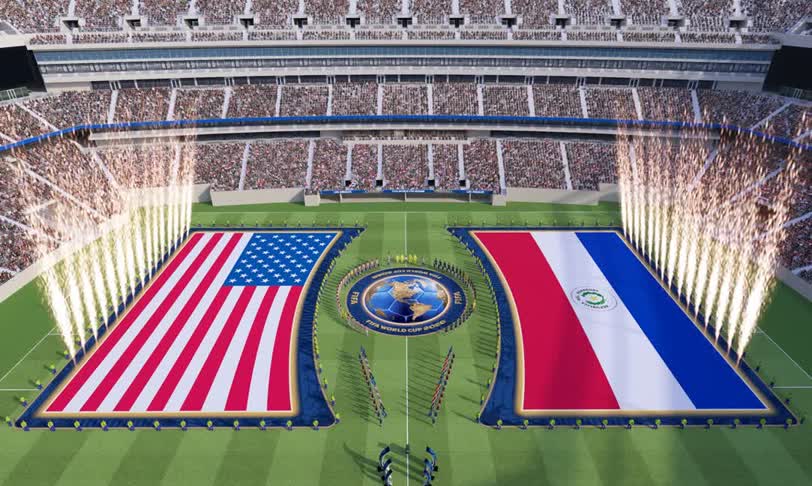
FIFA is introducing upgraded fan experiences, including enhanced pre-match ceremonies, larger national displays, immersive entertainment features, and improved digital engagement.
Sustainability and Fan Comfort
With many matches scheduled during the North American summer, heat management has become a major focus.
Planned measures include:
- Cooling zones
- Misting stations
- Hydration points
- Additional shade structures
- Medical response teams
These initiatives aim to improve fan safety and comfort throughout the tournament.
The Scale of the Event
The 2026 World Cup will be the largest sporting event ever hosted in North America.
Millions of visitors are expected to travel across the three host nations.
Furthermore, billions of viewers worldwide will follow the tournament through television, streaming, and digital platforms.
Economically, the tournament is projected to generate enormous revenues through tourism, sponsorships, broadcasting rights, merchandising, and ticket sales.
The event is also expected to accelerate football’s growth in North America for years to come.
Favourites
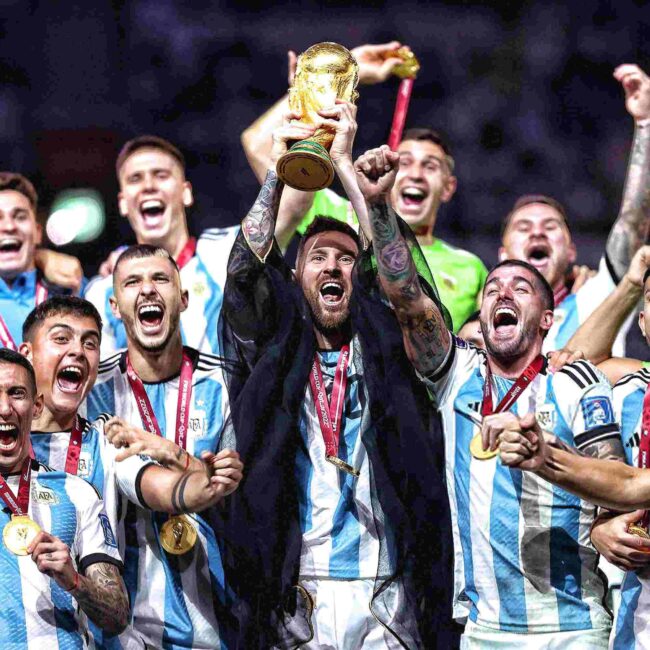
Several nations enter the tournament among the favorites.
Argentina
The defending champions will attempt to retain their crown and join football’s elite repeat winners.
France
Possessing one of the deepest talent pools in world football, France remains a major contender.
Brazil
The five-time world champions are always among the favorites and will seek to reclaim the trophy.
Spain
European champions and tactical innovators, Spain will arrive with significant expectations.
England
England’s golden generation continues to pursue its first World Cup triumph since 1966.
Germany
Never underestimate Germany at a major tournament.
Portugal
Armed with a talented squad, Portugal could be among the dark horses.
What Makes The 2026 FIFA World Cup Different?
Unlike previous tournaments, the 2026 edition combines massive geographic scale, unprecedented participation, revolutionary technology, and record-breaking financial rewards.
Moreover, the expanded format ensures broader global representation, giving more nations the opportunity to compete on football’s grandest stage.
At the same time, innovations in officiating, stadium infrastructure, and fan engagement are designed to create the most seamless World Cup experience ever delivered.
Controversies Surrounding the 2026 FIFA World Cup
Despite the excitement surrounding the tournament, the 2026 FIFA World Cup has not been without controversy. As preparations intensified across North America, several issues emerged that sparked debate among football supporters, players, governing bodies, and human rights organizations.
While FIFA views the competition as a landmark celebration of global football, critics argue that certain concerns could affect both the tournament experience and its long-term legacy, amongst which are:
The Expansion to 48 Teams
Perhaps the most debated change has been FIFA’s decision to expand the tournament from 32 to 48 teams.
Supporters of the expansion argue that it promotes greater inclusivity by giving more nations the opportunity to compete on football’s biggest stage. Countries from Africa, Asia, North America, and Oceania have benefited significantly from the additional qualification places.
However, critics believe the expansion could dilute the overall quality of the competition. Some analysts fear that the increased number of teams may lead to more one-sided matches during the group stage, while others have questioned whether player workloads are being pushed to unsustainable levels.
Furthermore, concerns have been raised about the additional strain placed on clubs, players, and domestic football calendars, particularly given the already congested fixture schedule faced by elite footballers.
Travel Distances and Player Fatigue
Unlike previous World Cups hosted within a single country or relatively compact region, the 2026 tournament will stretch across three nations and thousands of kilometres.
Teams could potentially travel between cities such as Vancouver, Miami, Mexico City, Seattle, and New York during the course of the competition.
Consequently, some managers and player unions have expressed concerns regarding travel fatigue and recovery time.
The vast geographical scale of the tournament has also generated questions about competitive fairness, as some teams may face considerably longer travel schedules than others depending on their group allocations and progression routes.
Climate and Extreme Weather Concerns
Another major talking point has been the potential impact of North America’s summer climate.
Several host cities regularly experience temperatures exceeding 30°C during June and July. Combined with high humidity levels in locations such as Miami, Houston, and Atlanta, concerns have emerged regarding player welfare and supporter safety.
Medical experts have warned that extreme heat could increase the risk of dehydration, heat exhaustion, and reduced player performance.
Therefore, FIFA has been forced to develop additional cooling measures, hydration breaks, and emergency response plans.
Nevertheless, critics argue that commercial considerations may have taken precedence over optimal playing conditions in some scheduling decisions.
Ticket Prices and Accessibility
The financial aspect of attending the tournament has also attracted criticism.
With matches taking place across some of North America’s most expensive cities, many supporters fear that the World Cup may become inaccessible to ordinary football fans.
Costs associated with flights, accommodation, transportation, and match tickets are expected to be among the highest in World Cup history.
Thereupon, fan groups have expressed concerns that the tournament could increasingly cater to corporate clients and affluent tourists rather than traditional supporters.
This debate mirrors similar criticisms directed at recent major sporting events around the world.
Security and Border Issues
The unique three-country hosting arrangement has introduced a range of logistical and political challenges.
Supporters, media personnel, and team delegations may be required to cross international borders multiple times throughout the tournament.
While FIFA and government authorities have pledged to streamline travel procedures, concerns remain regarding visa requirements, immigration policies, and border delays.
Additionally, evolving political dynamics between the host nations have occasionally fuelled speculation about potential complications for international visitors.
Commercialization of the Tournament
Some football traditionalists have criticized what they perceive as the increasing commercialization of the World Cup.
From expanded sponsorship agreements to enhanced corporate hospitality programs, critics argue that financial considerations are playing a larger role than ever before in shaping tournament decisions.
The growing number of matches and the extended tournament schedule have further intensified debates about whether FIFA’s primary motivation is football development or revenue generation.
However, supporters of FIFA’s strategy contend that increased commercial income helps fund football development projects around the world and supports smaller member associations.
Environmental Impact
Environmental groups have also questioned the sustainability of a tournament spread across an entire continent.
The extensive air travel required for teams, officials, media representatives, and millions of supporters is expected to generate a significant carbon footprint.
Although organizers have announced various sustainability initiatives, critics argue that the scale of transportation involved makes achieving genuine environmental targets extremely challenging.
The issue has become increasingly prominent as major sporting organizations face growing pressure to demonstrate environmental responsibility.
The Debate Over FIFA’s Growing Influence
Moreover, some observers have expressed concern regarding FIFA’s expanding influence over host cities and national governments.
Preparations for major tournaments often require substantial public investment in infrastructure, security, transportation, and stadium upgrades.
Critics argue that taxpayers frequently shoulder significant costs while FIFA retains a large share of tournament revenues.
Thus, debates surrounding accountability, transparency, and financial responsibility have resurfaced during preparations for the 2026 competition.
Iran’s Participation and Political Tensions
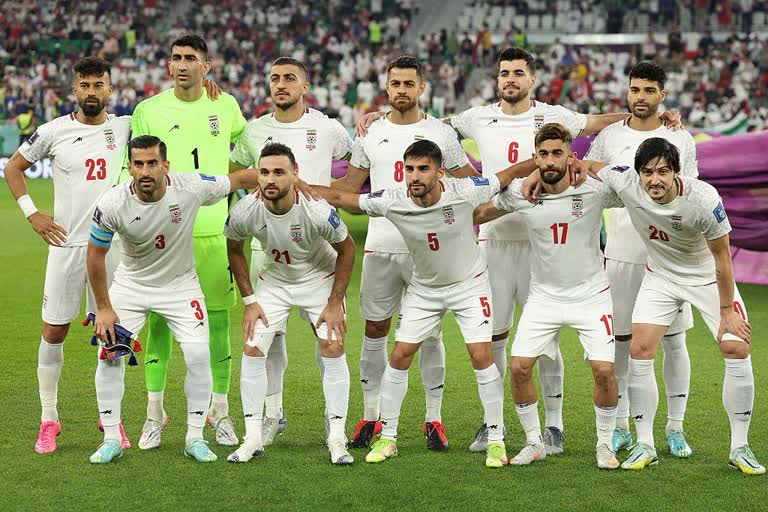
Few issues have generated as much debate ahead of the 2026 FIFA World Cup as the participation of the Iranian national team.
Iran qualified comfortably for the tournament and remains one of Asia’s strongest footballing nations.
However, the geopolitical relationship between Iran and one of the host nations, the United States, has created a series of complications that FIFA has been forced to navigate carefully.
The controversy intensified due to diplomatic tensions, security concerns, and travel restrictions affecting Iranian citizens. Questions emerged regarding whether Iranian players, officials, and supporters would be able to travel freely to the United States for matches scheduled on American soil.
While FIFA repeatedly maintained that qualified teams should be allowed to participate regardless of political disputes, uncertainty persisted throughout much of the build-up to the tournament.
At various stages, reports suggested that Iran might consider withdrawing from the competition due to regional conflicts and security concerns.
Iranian officials publicly questioned whether participation was appropriate under the prevailing circumstances, while FIFA insisted that Iran remained a qualified nation expected to compete in the tournament and the tournament schedule will proceed as planned.
Thereafter, additional controversy emerged when several Iranian officials reportedly encountered visa difficulties, forcing the team to relocate its training base to Mexico rather than the United States.
Furthermore, Iran’s football federation accused organizers of unfair treatment after a dispute involving ticket allocations for Iranian supporters, many of whom had already made travel arrangements.
The federation argued that the situation undermined FIFA’s commitment to neutrality and equal treatment for all participating nations.
More recently, the Iranian national team has reportedly been restricted to entering the United States only on match days and must return immediately to its base camp in Mexico after each game.
The arrangement, unprecedented in World Cup history, forced Iran to relocate its training base from Arizona to Tijuana and has complicated preparations, media obligations, and recovery schedules.
The issue has placed FIFA in a delicate position. On one hand, the governing body is committed to political neutrality and equal access for all qualified teams. On the other hand, it must operate within the legal and security frameworks of the host nations.
Hence, Iran’s participation has become one of the tournament’s most politically sensitive and closely scrutinized stories.
The situation has highlighted the challenges of staging a global sporting event in an increasingly complex geopolitical environment, where football and international politics can become difficult to separate.
A Tournament Under the Spotlight
While these controversies continue to generate discussion, they are unlikely to diminish global interest in the tournament itself. Every World Cup arrives with challenges and criticisms, yet the competition consistently captures the imagination of billions worldwide.
For FIFA, the success of the 2026 World Cup will depend not only on the quality of football on display but also on its ability to address concerns surrounding player welfare, fan accessibility, sustainability, and tournament logistics.
Therefore, the event will serve as both a celebration of football and a significant test of FIFA’s vision for the future of the sport.
Final Thoughts
The 2026 FIFA World Cup is far more than just another football tournament. Rather, it represents a transformative moment in the sport’s history.
With 48 teams, 104 matches, three host nations, cutting-edge technology, enhanced officiating systems, record prize money, and some of the world’s most iconic stadiums, the competition promises to set new standards for global sporting events.
Whether you are a lifelong football supporter, a casual viewer, a traveler planning a World Cup adventure, or a journalist covering the spectacle, the summer of 2026 is poised to deliver one of the most memorable sporting experiences the world has ever witnessed.
From the opening whistle in Mexico City to the final celebration in New York New Jersey, the tournament will showcase football on a scale unlike anything seen before!